Xander Hartmann · 27 September 2026
Federal Evaluation Uncovers Shortcomings in Trail Preservation Efforts Nationwide
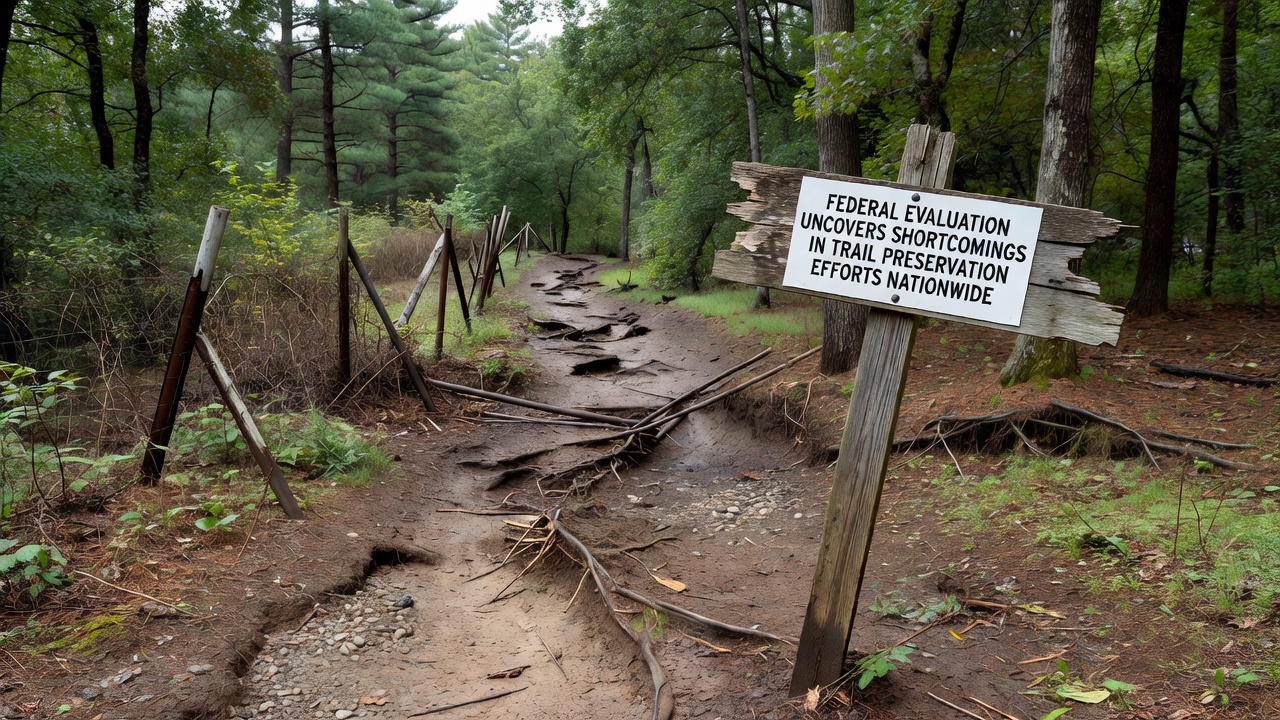
Federal evaluators released findings in September 2026 that detail persistent gaps in how agencies maintain and protect long-distance trails across the United States. The assessment examined segments of the National Trails System and identified shortfalls in funding allocation, routine maintenance schedules, and coordination between federal, state, and local partners. Data collected from trail segments in multiple regions showed accelerated wear on tread surfaces, overgrown vegetation in designated corridors, and incomplete signage that affects user navigation.
Scope of the Federal Review
The evaluation covered more than 1,200 miles of congressionally designated trails managed primarily by the National Park Service adn the U.S. Forest Service. Teams reviewed records from fiscal years 2023 through 2025, then conducted field visits during spring and summer 2026. Researchers documented 47 sites where drainage structures had failed or were missing entirely, while another 62 locations showed evidence of unauthorized trail widening caused by user detours around obstacles. These observations align with inventory data maintained by the agencies themselves, yet the report notes that remediation plans often remain unfunded beyond the planning stage.
Trail conditions in the Pacific Northwest and the Southwest reflected different stress factors. In one case, crews in Oregon recorded heavy winter runoff that undercut trail benches along a 14-mile stretch of the Pacific Crest Trail. In Arizona, evaluators found that invasive buffelgrass had spread into a buffer zone adjacent to the Arizona National Scenic Trail, increasing wildfire risk and requiring specialized removal crews. Both examples illustrate how regional climate patterns and vegetation dynamics intersect with limited staff capacity.
Funding and Staffing Patterns
Budget figures examined during the review indicate that annual appropriations for trail maintenance have remained flat in real dollars since 2019, while labor costs and material expenses have risen. Agencies reported that seasonal crews often complete only 65 percent of scheduled work orders because positions stay vacant for months. The evaluation cites internal Forest Service metrics showing an average of 2.3 full-time equivalents assigned per 100 miles of trail, a ratio that leaves little margin for emergency repairs after storms or floods.

Observers note that volunteer programs fill some gaps, yet training requirements and liability considerations limit the scope of tasks volunteers can perform. One partnership in teh Midwest logs more than 8,000 volunteer hours annually, but those contributions focus on light brushing and litter removal rather than structural repairs that require heavy equipment. The federal report suggests that expanding technical training for volunteers could extend agency reach, though no implementation timeline appears in current planning documents.
Interagency Coordination Challenges
Multiple jurisdictions often share responsibility for a single trail corridor, and the evaluation found that data-sharing protocols remain inconsistent. When the Bureau of Land Management, National Park Service, and state park departments each maintain separate condition databases, updates about trail closures or hazard reports can lag by weeks. Evaluators tracked one incident in which a bridge closure notice issued by a state agency did not reach the federal trail website until 19 days later, affecting trip planning for long-distance hikers.
Efforts to standardize reporting formats have progressed slowly. A pilot project launched in 2024 between three agencies in the Rocky Mountain region introduced a shared mobile application for condition assessments, yet rollout to additional districts stalled after initial funding expired. The September 2026 evaluation recommends renewed investment in such tools, citing measurable reductions in duplicate site visits where the app was tested.
Environmental and Cultural Resource Concerns
Preservation extends beyond tread maintenance to protection of adjacent natural and cultural resources. The federal review documented cases where trail realignments had inadvertently encroached on archaeological sites or sensitive plant communities. In one documented example, a reroute completed in 2022 crossed a previously unrecorded lithic scatter in Utah; subsequent consultation with tribal representatives led to further adjustments that were not fully reflected in updated trail maps until mid-2026.
Wildlife corridor connectivity also surfaced as an issue. Camera trap data from several western trails showed increased ungulate use of trail corridors during daylight hours, suggesting that human traffic patterns may be displacing animals from traditional routes. Researchers have begun correlating these observations with seasonal closure policies, though comprehensive studies remain limited.
Next Steps Identified in the Evaluation
The report outlines a series of recommendations that emphasize updated condition inventories, multi-year funding commitments, and expanded use of remote sensing to monitor trail surfaces. Agencies have been directed to submit revised maintenance plans within 180 days. Whether Congress will appropriate additional resources remains uncertain, yet the evaluation provides a baseline against which future progress can be measured.
Conclusion
The September 2026 federal evaluation supplies a clear inventory of where trail preservation efforts fall short of established standards. By documenting specific maintenance gaps, funding shortfalls, and coordination obstacles across diverse regions, the assessment supplies agencies and partners with measurable benchmarks. Implementation of the outlined recommendations will determine whether conditions improve before the next comprehensive review cycle begins.